
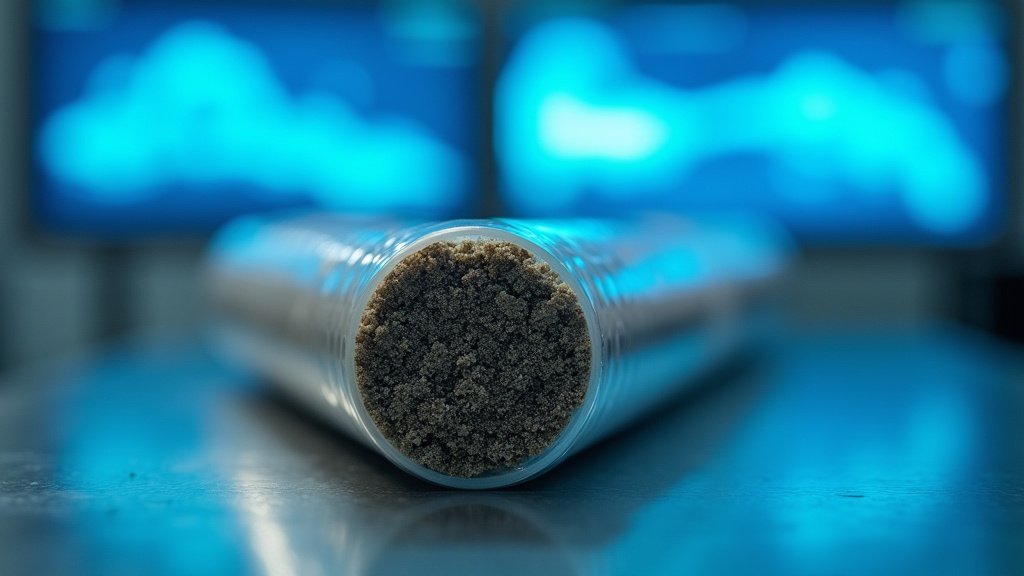
United Oil & Gas has reached a critical technical milestone in its Caribbean exploration strategy, reporting the discovery of thermogenic hydrocarbons within its Walton-Morant licence area offshore Jamaica. This development, derived from comprehensive geochemical analysis of 42 piston core samples collected during a 2026 seabed survey, represents a significant de-risking event for the exploration prospect. While the identification of these hydrocarbons—specifically butane and pentane—does not equate to a commercial oil discovery, it provides the strongest evidence to date of an active, mature petroleum system operating beneath the Jamaican seabed, fundamentally altering the geological outlook for the region.
Key Highlights
- Thermogenic Signature: The analysis confirmed the presence of C4 and C5 hydrocarbons, which are consistent with deeply buried, heat-processed petroleum systems rather than shallow biogenic surface gas.
- Walton-Morant Licence: The findings were localized within this vast 22,000-square-kilometre exploration block, a high-impact asset that has been the focus of multi-year seismic and bathymetric studies.
- De-Risking Success: The successful retrieval and analysis of sediment cores serves as a major technical milestone, designed specifically to reduce geological uncertainty and attract development partners.
- Future Outlook: United Oil & Gas is now advancing its farm-out process, utilizing this new dataset to engage with potential partners to fund the next, more costly phase: commercial exploration drilling.
Decoding the Geochemical Breakthrough
The narrative surrounding Jamaica’s offshore oil potential has shifted from speculative to evidence-based with the latest technical release from United Oil & Gas. For years, the Caribbean nation has been viewed as a high-risk, high-reward frontier, often compared to the prolific Guyana-Suriname basin. However, the lack of definitive subsurface data has historically kept major international players on the sidelines. The 2026 Seabed Geochemical Exploration (SGE) programme was specifically engineered to address this gap.
The Science of Thermogenic Hydrocarbons
In petroleum geology, distinguishing between biogenic gas (created by shallow bacteria) and thermogenic hydrocarbons (created by heat and pressure at depth) is the primary hurdle in exploration. Biogenic gas is ubiquitous and rarely points to large-scale reserves. Thermogenic hydrocarbons, specifically butane and pentane, are distinct fingerprints of a mature “kitchen”—a deep geological layer where organic material has cooked under immense pressure for millions of years. The identification of these compounds in 42 separate core samples provides a compelling argument that the Walton-Morant basin is not merely a geographic location for potential resources, but an active, functioning geological system.
Integrating 3D Seismic and Seabed Mapping
The 2026 survey was not a standalone effort but the culmination of a three-stage technical program. Stage 1 utilized multibeam echosounder (MBES) mapping to create a high-resolution bathymetric image of the seabed, identifying structural traps and anomalies. Stage 2 involved heat flow probes to assess the thermal profile of the basin. The final stage, the piston coring, was the precise targeting of those anomalous areas identified by satellite-derived slick data and the earlier seismic imaging. By correlating the geochemical findings with 3D seismic mapping, United Oil & Gas has moved beyond theoretical modeling into empirical verification.
The Economic Mechanics of the ‘Farm-Out’
For a mid-sized exploration firm like United Oil & Gas, the next step involves a strategic maneuver known as a “farm-out.” This process involves transferring a portion of the licence interest to a larger, well-capitalized oil major or independent exploration partner. This partner would effectively cover a substantial share of the costs for future exploration wells in exchange for a stake in the project. The 2026 data serves as the “hook.” By demonstrating that the petroleum system is active and reducing the probability of a “dry hole” (a well that yields no oil), the company has significantly increased the project’s valuation. The goal is to translate this technical validation into a formal partnership agreement that can carry the massive capital requirements of offshore drilling.
Historical Context and Regional Geology
Historically, the Caribbean has been a patchwork of exploration successes and failures. The Walton-Morant basin shares structural similarities with other prolific basins in the region, including the Guyana-Suriname basin, which has seen massive discoveries by ExxonMobil and its partners. However, Jamaica’s geology presents unique challenges, including complex faulting and the need to confirm reservoir quality. The latest data suggests that the source rock is indeed mature, one of the three critical pillars of a successful prospect, alongside reservoir rock and a reliable trap mechanism. This discovery acts as the first major piece of the puzzle, validating the geological thesis that has underpinned the project since 2017.
FAQ: People Also Ask
1. Does this discovery mean Jamaica is now an oil-producing nation?
No. This discovery is a technical validation of the petroleum system, not a commercial discovery of oil reserves. It proves that the geological mechanisms for creating oil exist in the area, which increases the likelihood that drilling will find commercially viable resources, but commercial production remains a future possibility pending successful exploration drilling.
2. What is a ‘thermogenic’ hydrocarbon?
Thermogenic hydrocarbons are chemical compounds (like butane and pentane) formed by the thermal degradation of organic matter under the intense heat and pressure of deep burial. Their presence is a primary indicator of a mature petroleum system that has the potential to generate and expel oil and gas, unlike ‘biogenic’ gases which are formed near the surface and rarely indicate a commercial field.
3. Why is this considered ‘de-risking’?
In oil exploration, the primary risk is spending millions to drill a well only to find no oil. By conducting geochemical seabed surveys first, companies can identify ‘seeps’ (traces of oil or gas migrating to the surface). If these seeps are confirmed to be thermogenic, it confirms the source rock works, which significantly reduces the geological uncertainty—or ‘risk’—associated with the prospect, making it more attractive for investment.
4. What is a ‘farm-out’ in this context?
A farm-out is an agreement where the current licence holder (United Oil & Gas) trades a percentage of its ownership in the project to a partner in exchange for that partner funding the next phase of work, typically expensive offshore drilling operations. It is a common strategy to share the financial risk and capital intensity of frontier offshore exploration.
5. What is the next step for the Walton-Morant Licence?
The company is currently using this new data to refine its geological models and prospect definition, while actively engaging with potential partners. The ultimate goal is to secure a partner and the necessary funding to proceed to the drilling phase, which would be the only way to definitively prove the existence of recoverable oil quantities.