
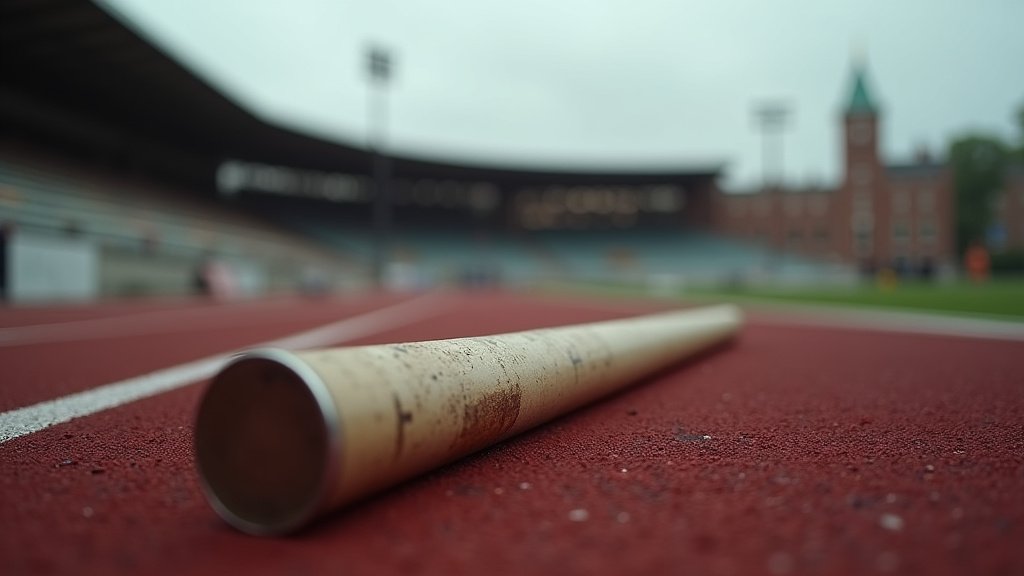
The hallowed track at Franklin Field in Philadelphia has once again become the global epicenter of high school athletics as the 130th staging of the Penn Relays officially enters its boys’ competition phase. Following an electric opening series of events that saw top-tier performances from the girls’ divisions, the boys’ teams have taken center stage, bringing with them a legacy of speed, tactical brilliance, and intense regional rivalry that has come to define this historic carnival. For spectators and scouts alike, today marks a pivotal moment in the 2026 calendar, as the Jamaican high school contingent looks to continue its multi-decade stranglehold on the relay events.
Key Highlights
- 130th Edition: The Penn Relays celebrate 130 years of history, maintaining its status as the oldest and largest track and field competition in the United States.
- Jamaican Dominance: High school juggernauts, including Jamaica College, Kingston College, Calabar High, and Excelsior High, return with high expectations, aiming to secure multiple Championship of America titles.
- Strategic Rotation: Under the established rotation policy, today’s schedule focuses heavily on the preliminary heats of the 4x800m and 4x400m relays, determining the lanes for the weekend’s high-stakes finals.
- Athletic Excellence: The event serves as a primary proving ground, often predicting the future of international track and field stars who transition from these relays to the professional circuit.
The Track Capital: The 130th Staging of the Penn Relays
The atmosphere at Franklin Field today is nothing short of electric. The iconic venue, nestled on the campus of the University of Pennsylvania, has transformed into a melting pot of athletic ambition and national pride. The Penn Relays are not merely a track meet; they are a cultural institution, drawing thousands of fans who travel from across the Caribbean and the United States to witness what is arguably the most competitive high school relay carnival in the world. As the boys bow into action today, the intensity in the stadium is palpable. The Jamaican teams, known for their distinct baton-passing precision and explosive closing speed, are the teams to beat, having set the gold standard in relay competition for the past two decades.
A Legacy of Speed: The Jamaican Footprint
For decades, the story of the Penn Relays has been inextricably linked to the success of Jamaican high school programs. Schools like Calabar High and Kingston College (KC) do not just bring athletes; they bring a systematized approach to athletics that often rivals professional club setups. This dominance is not accidental. It is the result of a rigorous, community-driven athletic culture where track and field is elevated to the status of a major sport, supported by deep-rooted rivalries that push every student-athlete to perform at their absolute peak.
When these teams step onto the track, they are not just running for their schools; they are running for their island’s reputation. The crowd, often dominated by the sea of green, yellow, and black flags in the stands, roars with a unified intensity that creates a ‘home away from home’ environment for the Jamaican squads. This year, the stakes feel even higher. After last year’s performances and the rigorous qualification processes back home, the teams entering Franklin Field this week have been battle-tested in the ISSA/GraceKennedy Boys and Girls’ Championships, ensuring that only the most prepared and mentally resilient athletes are representing their colors on the American track.
Tactical Precision in the 4×800 and 4×400
Today’s focus is squarely on the preliminary rounds of the 4x800m and 4x400m Championships of America. These races require more than just raw speed; they demand tactical intelligence. Coaches are managing their lineups with surgeon-like precision, balancing the need to win heats with the necessity of preserving energy for the finals.
In the 4x800m, the challenge is maintaining a consistent pace while positioning the team to avoid the chaotic traffic of the opening lap. The Jamaican schools have shown a remarkable ability to read these races, often staying tucked in the middle of the pack before unleashing a devastating kick in the final 200 meters. The 4x400m, meanwhile, is the marquee event for many of these schools, serving as the ultimate test of endurance and team cohesion. With nine lanes of high-octane runners, the margin for error is razor-thin. A botched handoff can turn a medal-contending performance into a heartbreaking disqualification, a lesson that these seasoned relay squads have learned over years of intense training and high-pressure competition.
Franklin Field: A Hallowed Stage
Beyond the raw statistics and clock times, there is the factor of the venue itself. Franklin Field is a stadium with history etched into every blade of grass. For a teenager from a school in Kingston or St. Elizabeth, stepping onto this track is a rite of passage. It is the place where legends are born—where athletes like Usain Bolt and countless other Olympic hopefuls cut their teeth before achieving global stardom.
As the boys take to the track today, they are acutely aware of the ghosts of the past. The banners of past champions lining the stadium walls serve as both a motivation and a daunting challenge. The challenge for today’s competitors is to harness that nervous energy and channel it into fluid, efficient mechanics. The surface at Franklin Field is notoriously fast, and in favorable weather conditions, records often tumble. With the 2026 season already seeing impressive times domestically, experts are predicting that we could see a new standard set in the relay categories this year, provided the weather holds and the tactical execution remains sharp.
As the sun beats down on the track throughout the day, the narrative will inevitably shift from who is running to who is advancing. The ‘Championship of America’ designation is the ultimate prize for these high schoolers, and the journey to the final begins with today’s prelims. It is a day of anticipation, where the landscape of high school track and field is reshaped one relay race at a time.