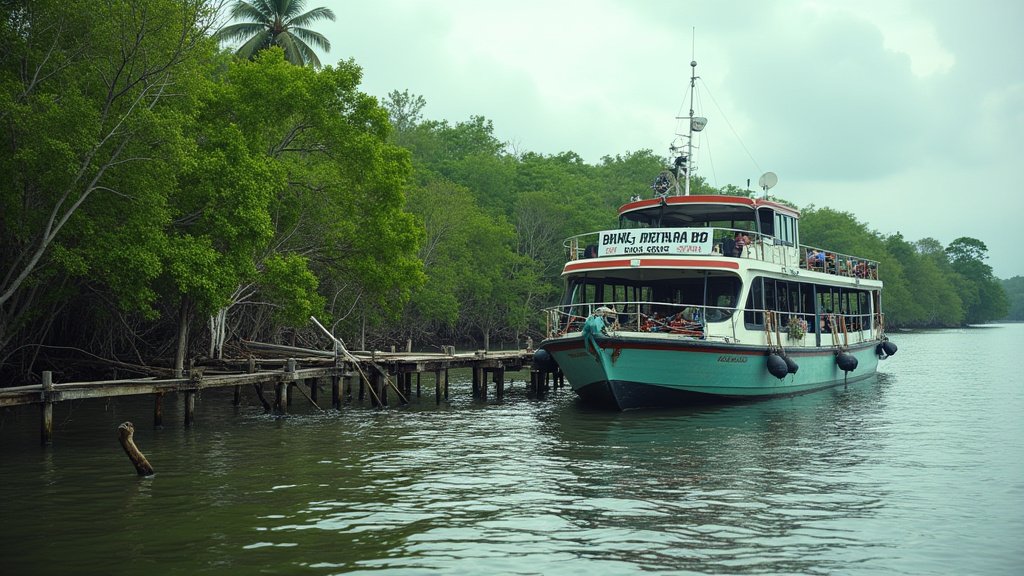
The reopening of Black River Safari Tours signifies more than just the resumption of a popular tourist activity; it represents the resilience and determination of the Black River community in the face of overwhelming natural disaster. Hurricane Melissa, a Category 5 storm, made landfall on October 28, 2025, leaving a trail of destruction across Jamaica, with St. Elizabeth being particularly hard-hit. The safari, a beloved attraction known for its unique ecosystem and wildlife, including crocodiles, suffered extensive damage, primarily from severe flooding.
Joseph Ryan Swaby, managing director of Black River Safari Tours, stated that the interior of their main building has been rebuilt to its former state, and premises have undergone significant clean-up, though it remains a work in progress. However, the operational capacity is currently limited. Only two of the six tour boats have been retrieved and recommissioned for service. The crocodile nursery, a key feature for visitors, remains closed due to extensive damage. Swaby anticipates full restoration by the end of January 2026, with ongoing efforts to recover the remaining four boats that were pushed into remote parts of the Black River Morass by the storm surge.
The decision to reopen, even at a reduced capacity, was a conscious effort to help restore a sense of normalcy and encourage other businesses in the heritage-rich town to follow suit. “The reason we are reopening is to push that,” Swaby explained. “We hope that other businesses choose to reopen as well, even if not at full capacity. It will help bring back the feel-good factor, especially around the festive season.” The reopening is seen as a vital step in boosting confidence in the restoration of Black River and supporting the local economy, which heavily relies on tourism.
Community Resilience and Road to Recovery
The impact of Hurricane Melissa extended beyond the safari grounds, affecting the entire Black River community. Many residents, including staff members of the safari, suffered significant losses, with some losing their homes entirely. However, the community’s spirit of resilience is evident in the ongoing recovery efforts. The use of an amphibious excavator, provided by the National Irrigation Commission (NIC) and supported by the Ministry of Agriculture and Fisheries, has been instrumental in retrieving damaged boats, including those belonging to Black River Safari Tours and St. Elizabeth Safari Crocodile Tour.
Dr. Donovan Bennett, proprietor of St. Elizabeth Safari Crocodile Tour, has been working to recover his fleet of tour boats, with assistance from various entities. The cooperative efforts highlight the collaborative approach being taken to rebuild the town’s vital tourism infrastructure. Beyond the safari operations, the broader restoration of Black River involves rebuilding infrastructure and preserving the town’s rich history, which has been deeply intertwined with events like Hurricane Melissa. The local government officials are advocating for a methodical approach to rebuilding, emphasizing the importance of utilizing the best building methodologies and environmental solutions to withstand future weather events.
The reopening of Black River Safari Tours serves as a powerful symbol of recovery and a testament to the enduring spirit of Jamaica’s tourism sector. As more attractions and businesses come back online, the island is reaffirming its position as a resilient and welcoming destination.