
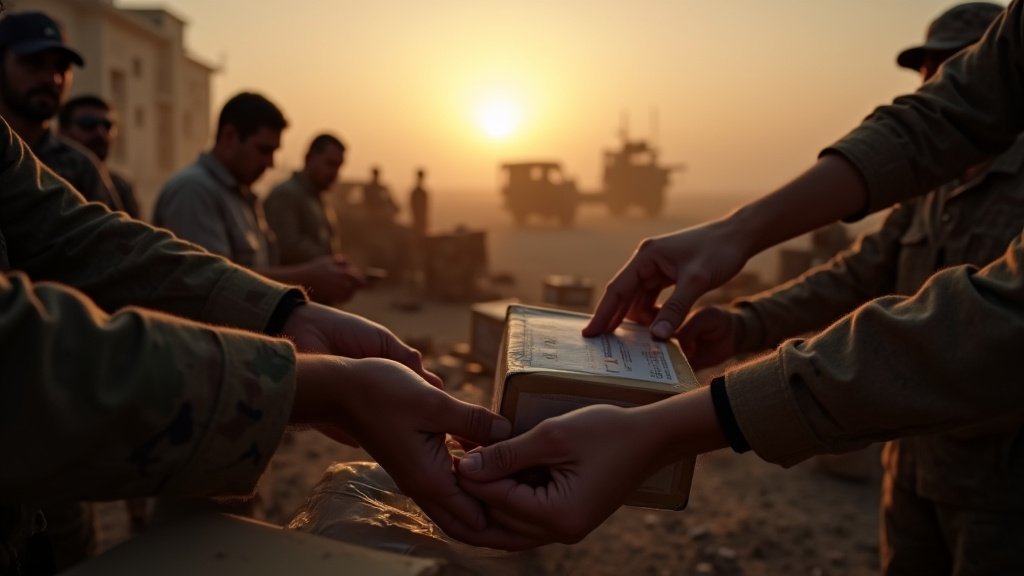
The United States has put forth a 15-point ceasefire plan to Iran, utilizing intermediaries from Pakistan to convey the proposal. This diplomatic initiative is occurring concurrently with a substantial U.S. military buildup in the Middle East, with reports indicating the deployment of at least 1,000 troops from the 82nd Airborne Division to join approximately 50,000 forces already in the region. Furthermore, two Marine Expeditionary Units are being dispatched, augmenting the military presence with around 5,000 Marines and thousands of sailors. In parallel, there are reports of approximately 200 U.S. troops being sent to Israel to assist in supporting and monitoring a ceasefire agreement in Gaza, as part of a multinational contingent. This engagement in Gaza is described as the initial phase of a broader peace initiative, aimed at facilitating humanitarian aid and providing essential logistical and security support to the war-torn region.
Conflicting Ceasefire Stances Emerge
Despite the reported ceasefire offer, the Trump administration’s position appears divided. President Trump himself has explicitly stated his opposition to a ceasefire with Iran, declaring on March 20, 2026, that the U.S. was “literally obliterating the other side” and thus saw no need for a ceasefire. This contrasts with earlier developments in October 2025, when a significant breakthrough was announced, with the Israel Cabinet approving a ceasefire and hostage release deal following U.S. diplomatic pressure. The administration’s current actions suggest a complex and potentially contradictory strategy, balancing diplomatic overtures with a show of military force.
Geopolitical Ripples and Regional Reactions
The U.S. administration’s ceasefire proposal to Iran has reportedly surprised Israeli officials, who had been advocating for the continuation of military operations. On the other side, Iranian officials have maintained a defiant tone, emphasizing the role of their armed forces in ensuring regional stability and asserting that no compromise would be reached with the United States. The significant troop deployments, including Marines and sailors, are being interpreted by some observers as potential precursors to ground operations.
International Cooperation and Governance Challenges
The multilateral nature of the Gaza ceasefire efforts is evident, with potential involvement from countries such as Qatar, Egypt, Turkey, and the United Arab Emirates alongside American forces. The U.S. Central Command is slated to establish a “civil-military coordination center” in Israel to streamline the flow of humanitarian aid and other forms of assistance into Gaza. However, critical unresolved issues loom, including the disarmament of Hamas, the eventual withdrawal of Israeli forces from Gaza, and the establishment of a stable future civilian government for the territory.
FAQ: People Also Ask
Q: What is the US proposing as a ceasefire plan?
A: Reports indicate the Trump administration has offered a 15-point ceasefire plan to Iran, submitted via Pakistani intermediaries. This plan, in its first phase for Gaza, aims to oversee and support a ceasefire, coordinate humanitarian aid, and provide logistical and security assistance.
Q: Why are US troops being sent to the Middle East?
A: The deployments are multifaceted. Some troops are reportedly heading to Israel to support and monitor a ceasefire deal in Gaza, while a larger deployment of over 1,000 troops from the 82nd Airborne Division, along with Marines and sailors, is also underway in the broader Middle East region.
Q: What is Iran’s response to the US ceasefire proposal?
A: Iranian officials have expressed defiance, asserting that regional stability is maintained by their armed forces and that no agreement will be reached with the U.S. They have stated that their position has been consistent since day one and will not change.