
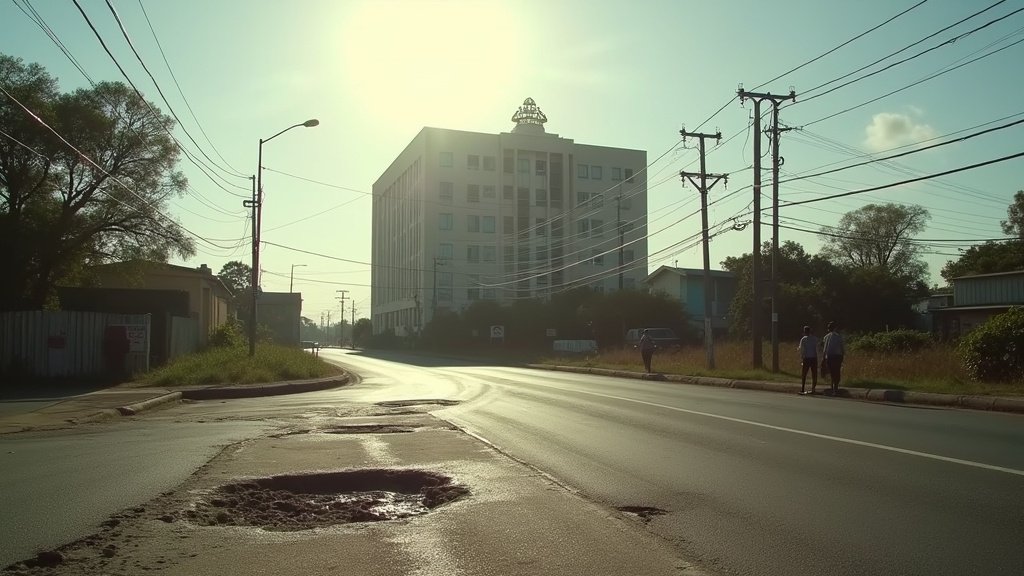
A significant proposal is shaking up Jamaica’s infrastructure discussions. The government plans a ‘One Road Authority’. This new body would centralize road management. It aims to merge the National Works Agency (NWA) and parochial road units. This move seeks to streamline oversight and maintenance. However, the plan faces strong criticism. Many argue it does not address the core issue.
The Rationale for Centralization
Minister without Portfolio, Robert Morgan, champions the proposal. He highlights a major problem. Jamaica has over 27,000 kilometers of roads. Only about 5,000 kilometers fall under the NWA. Other roads are managed by municipal corporations or RADA. Many are considered ‘orphaned’. This fragmentation creates confusion. It leads to inconsistent standards. The government states a unified authority is needed. This body would set and enforce a single standard for all road works. It would also strengthen quality assurance and compliance. Clearer accountability is a stated goal. The SPARK programme revealed the lack of a central road registry.
Promises of Efficiency and Uniformity
Proponents believe a One Road Authority offers benefits. It promises greater efficiency. Management would become simpler. Uniform standards would ensure durability. This would prevent varying repair quality across parishes. It could also improve response times for repairs. The government insists it is not about taking power. Instead, it aims to empower citizens with a clear system.
Funding Concerns Dominate Criticism
Critics, however, argue Jamaica’s road crisis is financial. They state the problem is a lack of funding. It is not a structural issue. Creating a new authority will not add more money. It may just shift limited resources. This could result in a larger bureaucracy. Some fear increased political interference. Others worry about losing local accountability.
Decentralization as an Alternative
Experts suggest decentralized models can work well. Barbados uses a system that divides responsibilities. This approach focuses on strong national standards. It also preserves local responsiveness. Municipal corporations need better resources. The NWA should focus on major roads. Contractors require proper supervision. Communities need direct access to road authorities.
Financial Realities and Community Input
Road rehabilitation requires substantial investment. Estimates suggest around $20 billion annually for 15 years. Some see the proposal as an organizational reshuffle. It is dressed up as transformation without funding. The government acknowledges the need for community involvement. Consultations are planned to shape the authority’s function. Many Jamaicans simply want functional roads. They care less about which agency is responsible.
Moving Forward
The Cabinet has approved the policy framework. Significant consultation is still required. The debate highlights a key challenge for Jamaica. Finding a sustainable funding model is crucial. Effective road maintenance requires both structure and resources. The future of Jamaica’s roads hangs in the balance. This news continues to be a major topic of discussion.