
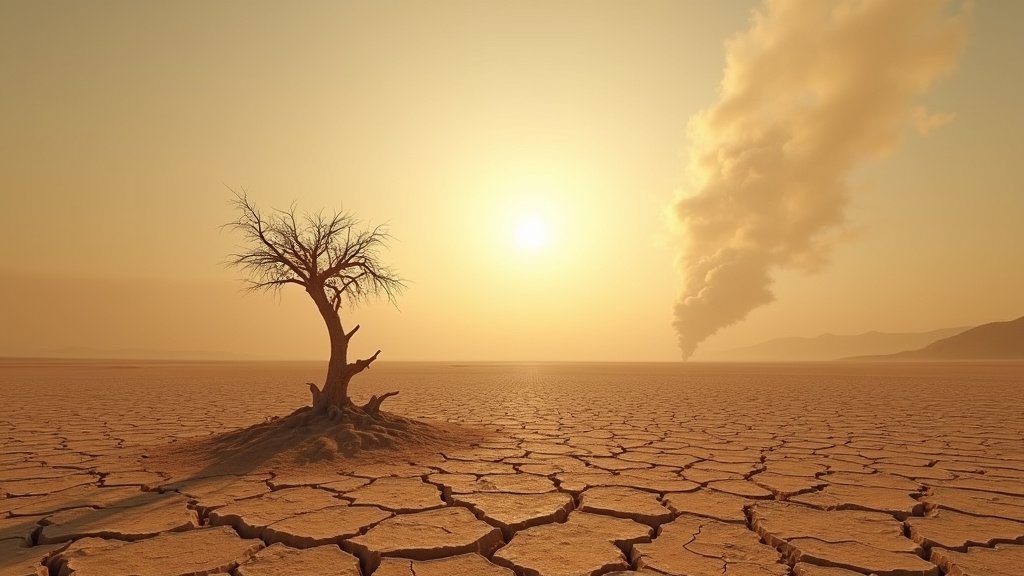
The world has entered a new era, one defined by what experts are calling global water bankruptcy. This is not a temporary crisis but a fundamental, irreversible failure, according to a recent United Nations report. The findings from the UN University Institute for Water, Environment and Health paint a stark picture of our planet’s water future, highlighting the profound implications of this global water bankruptcy.
Understanding Global Water Bankruptcy
The term “water bankruptcy” signifies a post-crisis state where natural water systems are so overused and degraded that they cannot recover to past conditions. This means humanity has lived beyond its hydrological means, overdrawing not just renewable water flows but also depleting stored water reserves like aquifers, glaciers, soils, and wetlands. Compounding this issue, pollution has further reduced usable water supplies, exacerbating the reality of global water bankruptcy.
The Unprecedented Scale of Water Bankruptcy
This new reality of global water bankruptcy has severe global implications. Nearly three-quarters of the world’s population lives in water-insecure countries, and about 4 billion people face severe water scarcity for at least one month annually. Furthermore, around 2 billion people live on land that is sinking due to groundwater depletion, a direct consequence of over-extraction that permanently reduces water storage capacity and intensifies the challenges of global water bankruptcy.
The consequences of this widespread water system degradation are visible worldwide. Rivers often fail to reach the sea, lakes and wetlands have shrunk or vanished, and forests and peatlands are drying and burning, leading to expanding deserts and dust storms. Major aquifers are experiencing long-term decline, with 70% of them showing such trends. Glaciers have lost over 30% of their mass since 1970, impacting billions who rely on these essential water “savings accounts.” This pervasive groundwater depletion is a critical component of the broader global water bankruptcy.
Key Drivers of Global Water Bankruptcy
Human activities are the primary drivers of this crisis. Decades of overuse and pollution, coupled with deforestation and land degradation, have pushed natural systems to their limit. Global warming further exacerbates the situation by altering precipitation patterns and increasing evaporation rates, leading to more frequent and pervasive droughts. This human-induced stress is a significant contributor to global water bankruptcy.
Anthropogenic drought, where water deficits are increasingly caused by human actions rather than natural variability, is a central feature of this new reality. This overuse significantly impacts agriculture, which accounts for about 70% of global freshwater withdrawals. Salinization has degraded millions of hectares of cropland, directly threatening global food supplies and underlining the urgency of addressing global water bankruptcy.
The Need for New Approaches to Water Management
The UN report argues that terms like “water stress” and “water crisis” are no longer adequate for describing the current situation. They imply temporary problems that can be resolved, whereas water bankruptcy signifies a permanent, systemic failure. This necessitates “bankruptcy management” rather than “crisis management,” requiring an honest admission of failure and a shift in perspective from tackling global water bankruptcy.
The focus must shift from returning to past baselines to preventing further irreversible damage and rebalancing demand and supply within new, limited hydrological realities. Protecting remaining natural capital is crucial, demanding transparent accounting and enforceable limits to mitigate the impacts of global water bankruptcy. Effective water management is key to achieving water security.
Furthermore, global water bankruptcy is intrinsically linked to issues of justice and security. The burdens fall disproportionately on vulnerable communities, including smallholder farmers, Indigenous Peoples, low-income urban residents, women, and youth. The report calls for a new global water agenda that addresses equity and protects those most affected by water scarcity and system degradation.
Pathways to Recovery Amidst Water Bankruptcy
Despite the grim diagnosis of global water bankruptcy, the situation is not entirely hopeless. Bankruptcy can mark the start of a structured recovery plan. Actions can include stopping the bleeding of water resources, protecting essential services, and restructuring unsustainable claims. Investing in water can also unlock progress in climate action, biodiversity conservation, and public health. A renewed focus on water can serve as a platform for cooperation and prevent further irreversible water damage. The news demands urgent action and a fundamental reset of how the world manages its most vital resource to navigate the era of global water bankruptcy.