
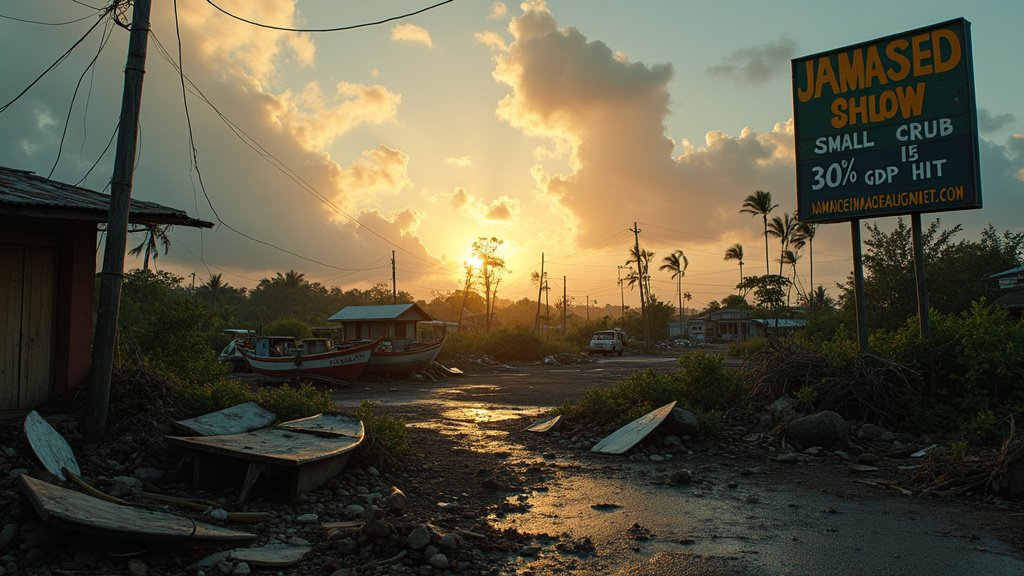
KINGSTON, JAMAICA – The devastating passage of Hurricane Melissa Jamaica, the strongest storm ever to make landfall in Jamaica, has left the island nation reeling from an economic shockwave equivalent to nearly one-third of its annual GDP. Preliminary estimates place the damage from Hurricane Melissa Jamaica at a staggering US$6 billion to US$7 billion, a sum that represents approximately 28% to 32% of Jamaica’s previous year’s gross domestic product. The impact news has sent ripples through the national economy, threatening to push the country’s debt-to-GDP ratio higher and prompting the government to activate emergency fiscal measures following the Hurricane Melissa Jamaica event.
Prime Minister Andrew Holness described the hurricane as a “warning,” emphasizing that its immense force was registered by seismographs hundreds of miles away. The storm, powered by record-warm sea temperatures, is being linked by scientists to accelerating climate change, which is intensifying storm systems worldwide. This unprecedented event has not only crippled Jamaica’s economic capacity but also resulted in a significant loss of life and widespread destruction across the wider Caribbean region, with Hurricane Melissa Jamaica being a prime example.
Hurricane Melissa Jamaica: Economic Devastation
The immediate aftermath of Hurricane Melissa has plunged Jamaica into an economic crisis. Prime Minister Holness announced that short-term economic output could decline by 8% to 13% due to Hurricane Melissa Jamaica. The damage has been particularly severe in Jamaica’s agricultural heartlands, notably in St. Elizabeth, and along the critical tourism corridors stretching from Westmoreland to St. Ann. Thousands of tourism workers have been left jobless, and major hotel brands have reported closures, further exacerbating the economic fallout and the Jamaica economic impact. Small and medium-sized enterprises (SMEs) have also sustained heavy losses, requiring liquidity and recovery support to rebuild inventories and restart operations after Hurricane Melissa Jamaica.
To address the mounting costs and fiscal pressures related to Hurricane Melissa Jamaica, the Jamaican government has announced its intention to activate emergency provisions to temporarily suspend fiscal rules. The country is actively seeking financial support from regional allies, development agencies, and the private sector. Furthermore, import taxes have been waived for essential relief products, including solar panels and Starlink kits, to aid in immediate recovery efforts. However, the scale of the disaster is so immense that even with potential payouts from catastrophe bonds and insurance, a significant financial shortfall is anticipated, highlighting the immense challenge of rebuilding after Hurricane Melissa Jamaica and the broader Caribbean disaster.
Human Toll Across the Caribbean from Hurricane Melissa Jamaica
Hurricane Melissa’s fury was not confined to Jamaica. The storm’s destructive path resulted in a tragic Caribbean death toll, with at least 75 confirmed fatalities. Haiti bore a significant portion of this human cost, reporting 43 deaths and 13 missing individuals due to torrential rains and flooding caused by Hurricane Melissa Jamaica. Communities in Haiti experienced widespread flooding, with nearly 12,000 homes inundated and critical infrastructure rendered impassable. Other Caribbean nations also faced considerable hardship and damage, underscoring the widespread impact of this catastrophic storm and the Hurricane Melissa Jamaica event.
The Science Behind the Superstorm of Hurricane Melissa Jamaica
Scientists are increasingly pointing to climate change as a significant factor behind the intensification of storms like Melissa. Record-warm sea surface temperatures provided the fuel for the hurricane’s extreme power, making Hurricane Melissa Jamaica one of the strongest Atlantic hurricanes ever recorded and the most intense to make landfall in Jamaica. Studies indicate that human-caused climate change has made storms of this magnitude four times more likely and significantly wetter and windier than in pre-industrial times. This aligns with broader scientific consensus that greenhouse gas emissions are warming ocean surfaces, creating a more volatile environment for tropical cyclones and increasing the risk of events like Hurricane Melissa Jamaica.
Jamaica Rebuilding Efforts for Resilience Post-Hurricane Melissa
In the wake of such widespread destruction from Hurricane Melissa Jamaica, Jamaica’s rebuilding efforts are focusing on long-term resilience. Prime Minister Holness has pledged to reconstruct infrastructure to withstand future, more powerful storms, including moving parts of the electric grid underground. Recommendations from experts and industry leaders include upgrading building codes to withstand Category 5 wind loads, implementing mandatory hurricane straps, elevating structures in coastal areas, and reinforcing foundations. There is a critical call for shelters, hospitals, and schools to be built to higher standards, equipped with backup power and communication systems. The nation is also looking to harden its lifelines, including power, water, and communication networks, with a view to deploying micro-grids and ensuring satellite backup for communications in the context of Hurricane Melissa Jamaica. The goal is not merely to rebuild what was lost but to create a more robust and resilient infrastructure capable of enduring the intensifying impacts of climate change storms.
The path to recovery for Jamaica and the broader Caribbean will be long and arduous. The economic damage is immense, the human cost is tragic, and the challenge of rebuilding resiliently in the face of a changing climate is significant. This news underscores the urgent need for global action to mitigate climate change and for robust support systems for vulnerable nations facing increasingly severe weather events, especially in the aftermath of a disaster like Hurricane Melissa Jamaica.